China Top 10 Rivet Hardware Manufacturers for Global Buyers

Time:2026-10-01 Author:Isabella
0%

Choosing a reliable Rivet Hardware manufacturer requires more than comparing catalog prices or polished factory photographs. Global buyers must examine material grades, dimensional consistency, production capacity, surface treatment, inspection methods, and export experience. A rivet may look simple, yet a slight variation in shank diameter can affect installation, joint strength, and long-term performance.

Fastening-systems engineer Mark D. Thomas once observed, “A dependable rivet begins with controlled material, not attractive packaging.” This practical point guides our selection. The companies included in this overview are assessed through manufacturing capability, quality-control procedures, technical support, and evidence of serving demanding industrial markets. Supplier communication also matters. Clear drawings, sample approval, traceability records, and realistic lead times often prevent expensive misunderstandings.

No ranking is flawless.

The China Top 10 Rivet Hardware Manufacturers for Global Buyers list is therefore intended as a structured starting point, not an automatic purchasing decision. Some manufacturers may excel in aluminum rivets, while others offer stronger stainless-steel solutions, blind rivets, tubular rivets, or customized components. Buyers should still request current test reports, production samples, packaging details, and independent verification where appropriate. Factory scale can be impressive, but it does not always guarantee stable quality. That is worth remembering.

This guide highlights suppliers that combine practical experience with measurable manufacturing discipline. It also recognizes an uncomfortable reality: even established factories can experience material changes, capacity pressure, or inconsistent communication. Careful evaluation remains essential before a long-term agreement.
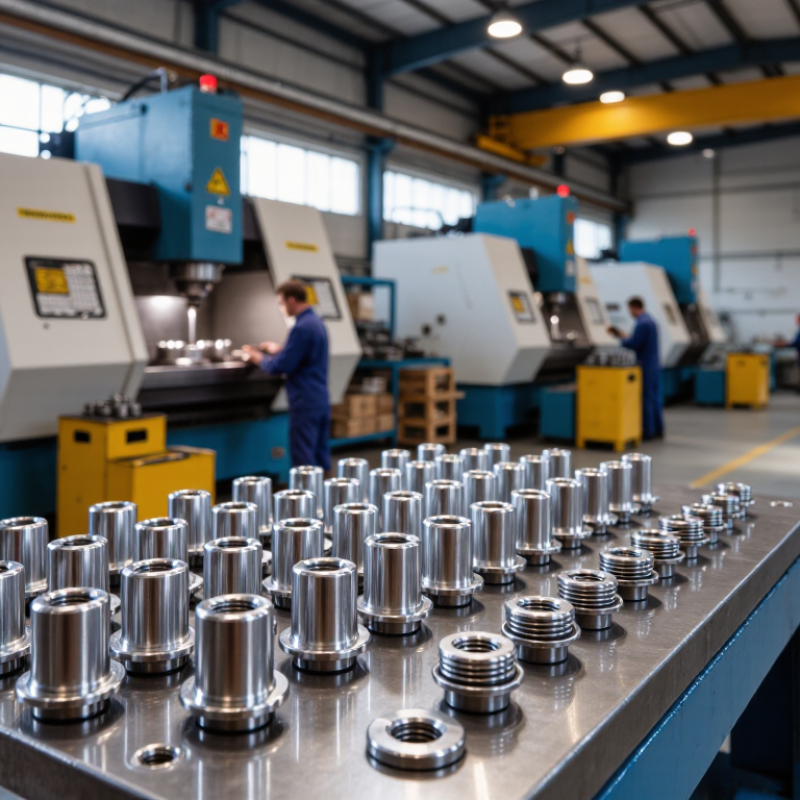
China Top 10 Rivet Hardware Manufacturers for Global Buyers

What Rivet Hardware Includes and Why China Is a Major Manufacturing Base

China Top 10 Rivet Hardware Manufacturers for Global Buyers

Rivet hardware includes more than the fastener seen on a finished panel. It may include solid rivets, blind rivets, semi-tubular rivets, washers, sleeves, mandrels, and setting tools. Feeding equipment and assembly fixtures can also matter.

The joint tells the story. Material choice depends on load, corrosion exposure, thickness, and installation access. Aluminum suits lightweight assemblies. Stainless steel supports demanding outdoor conditions. Carbon steel often serves cost-sensitive structural work, when surface protection is properly controlled.

China is a major manufacturing base because its industrial network connects metal mills, cold-forming plants, tooling workshops, plating facilities, and packaging suppliers. This concentration can shorten development cycles and support competitive production volumes.

Many factories also offer custom head shapes, shank dimensions, coatings, and mixed packaging. Export experience helps with drawings, inspection records, and shipment coordination. However, capacity alone does not prove quality.

In practical sourcing, buyers should check samples against drawings, not appearance alone. Measure diameter, length, hardness, coating thickness, and setting performance. Request material certificates and batch traceability.

A polished sample can still hide inconsistent forming. That is easy to miss. Supplier audits should review calibration records, process controls, and corrective actions.

Low pricing may reflect efficient production, but it may also signal thinner inspection or weaker tooling. Clear specifications, repeat testing, and honest communication usually protect the final assembly better than a rushed purchase.

How the Top 10 Chinese Rivet Hardware Manufacturers Are Selected

Selecting China’s top 10 rivet hardware manufacturers requires more than checking export volume. The evaluation should combine production experience, technical control, and delivery evidence. UN Comtrade data for HS 7318 places China among the leading exporters of iron and steel fasteners. This supports market capacity, but it does not prove factory reliability.

The selection process therefore reviews ISO 9001 certification, material traceability, dimensional inspection, and batch consistency. The ISO Survey shows China has one of the world’s largest ISO 9001 certificate bases. Still, a certificate alone is not enough.

We also examine equipment age, laboratory capability, tooling maintenance, and response speed for custom rivets. The World Bank’s Logistics Performance Index highlights delivery infrastructure as a major trade factor. That matters when buyers manage repeated container shipments. Some factories provide impressive samples, yet their production records remain unclear. That gap deserves careful review.

Tips: Request recent inspection reports, material certificates, and a controlled sample batch. Compare tolerance data, not only unit prices. Ask how rejected batches are isolated and corrected. A factory that admits a weakness may be more dependable than one claiming perfection. Pricing should be checked against alloy grade, coating, packaging, and testing requirements. LinkedIn pages and polished websites can help, but independent audits and verified customer references carry greater weight.

Profiles of China’s Top 10 Rivet Hardware Manufacturers

China’s top ten rivet hardware manufacturers serve different industrial needs, rather than one identical market. This profile groups them by proven capability: aerospace-grade precision, automotive volume, rail transport, shipbuilding, construction, electronics, renewable energy, stainless steel, custom tooling, and export logistics. These categories reflect practical buyer priorities. Dimensional control matters. So does traceability.

The World Steel Association reported that China produced about 1.019 billion tonnes of crude steel in 2023. That scale supports broad material access, but it does not guarantee consistent rivet quality. The strongest manufacturers typically show ISO 9001 systems, batch records, tensile-test results, and controlled heat treatment. Aerospace-focused producers emphasize tight tolerances and non-destructive inspection. Automotive suppliers focus on automated feeding, cycle stability, and high-volume repeatability. Marine and construction specialists often select corrosion-resistant alloys for humid environments.

Export buyers should compare sample reports, coating thickness, packaging, and failure-response procedures. The ISO 15977 standard provides useful guidance for certain blind rivets, while sector-specific requirements may be stricter. A 2023 United Nations Comtrade review of fastening-related trade categories also shows how widely metal fasteners move across borders, increasing the importance of documentation and customs accuracy. Some supplier profiles look impressive on paper. Production audits may reveal gaps. This is where judgment matters. Cost remains important, but the cheapest quotation can hide unstable batches, unclear alloy grades, or weak after-sales support.

The chart shows common nominal diameters used for blind rivets in international hardware applications. These standardized sizes are widely used across automotive, construction, appliance, and general industrial fastening.

How Global Buyers Can Compare Quality, Capacity, and Certifications

Global buyers comparing China’s top ten rivet hardware manufacturers should inspect evidence, not presentation. Start with samples made from identical drawings. Measure head diameter, shank length, and hole fit with calibrated gauges. Ask for material certificates and batch traceability. Small variations matter. A loose rivet may fail under vibration, even when its surface looks perfect.

Capacity requires more than a long machine list. Request monthly output for the required size range, current utilization, tooling backup, and realistic lead times. Review inspection plans, tensile results, hardness records, and corrosion testing where relevant. Certifications such as ISO 9001 can support process confidence, but buyers should verify validity, issuing bodies, and scope. A certificate is not proof of every batch. Check the details.

During supplier audits, compare production records with actual shop-floor conditions. Observe raw material labels, inspection stations, packaging, and finished-goods storage. Ask how nonconforming rivets are isolated and corrected. A factory may report impressive capacity, yet struggle during seasonal demand. That risk deserves discussion. Independent laboratory reports can strengthen technical claims, although testing methods must match the intended application. The comparison will not be perfectly clean; product sizes, materials, and order volumes can distort rankings. Record these differences before selecting a supplier.

Steps for Sourcing Rivet Hardware from Chinese Manufacturers

Sourcing rivet hardware from China starts with a precise product brief. State the rivet type, alloy, diameter, length, head shape, finish, and application. Add a simple drawing with tolerances. A clear specification prevents costly assumptions.

Shortlist manufacturers with relevant production experience and export records. Review factory photos, quality certificates, inspection procedures, and sample reports. Ask how operators control shank length and head formation. Request samples from regular production equipment, not specially prepared pieces. Check the samples with calipers, a hardness tester, and a visual inspection under strong light.

Discuss minimum order quantities, tooling charges, lead times, packaging, and delivery terms in writing. A small pilot order can reveal plating marks, mixed sizes, or weak packaging. Use an independent pre-shipment inspection when the order is important. Require batch numbers and inspection records for traceability. Payment should follow agreed milestones, not informal promises.

Communication deserves practical testing. Send three technical questions and measure the response quality. Vague answers may signal future problems. Specifications can still miss real assembly conditions. Test the rivets with your own materials and tools. One overlooked detail, such as hole clearance, can change installation performance. A perfect checklist does not exist, so record every defect and revise the next order.

FAQS

What does rivet hardware usually include?

It can include solid rivets, blind rivets, semi-tubular rivets, washers, sleeves, mandrels, and setting tools. Feeding equipment may also be needed.

How should buyers choose rivet materials?

Consider load, corrosion exposure, material thickness, and installation access. Aluminum suits lightweight assemblies. Stainless steel helps in demanding outdoor conditions.

Why is China a major manufacturing base for rivet hardware?

Its industrial network connects metal mills, forming plants, tooling workshops, plating facilities, and packaging suppliers. This can shorten development cycles.

Does large production capacity guarantee good rivet quality?

No. Capacity alone proves little. Buyers should check samples, measurements, batch records, and setting performance before placing large orders.

What should buyers measure during sample approval?

Measure diameter, length, hardness, and coating thickness. Test the rivets with real tools and materials. Appearance can mislead.

Which quality documents should a buyer request?

Request material certificates, batch traceability, inspection records, tensile-test results, and calibration records. Ask about corrective actions too.

How can buyers compare different manufacturers?

Compare relevant experience, sample reports, coating control, packaging, production audits, and failure-response procedures. A polished profile may hide gaps.

What information belongs in a rivet sourcing brief?

State the rivet type, alloy, diameter, length, head shape, finish, application, and tolerances. Include a simple drawing.

Why is a pilot order useful?

It can expose plating marks, mixed sizes, weak packaging, or unstable forming. Small tests cost less than large corrections.

How can buyers test supplier communication?

Send three technical questions and review the answers. Vague replies may create later problems. Still, communication is not proof of quality.

Conclusion

This guide explains what Rivet Hardware includes, from standard rivets and threaded inserts to washers, nuts, and related fastening components, and why China has become a major manufacturing base for global buyers. Its advantages include broad production capabilities, mature supply chains, flexible customization, competitive pricing, and experience serving diverse industrial applications. The article also outlines a practical method for selecting the top 10 Chinese manufacturers by examining product range, manufacturing capacity, quality management, technical expertise, export experience, certifications, and customer support.

For international buyers, the guide provides a clear framework for comparing suppliers based on material consistency, dimensional accuracy, testing procedures, production reliability, lead times, and documentation. It also describes the main steps for sourcing Rivet Hardware from China, including defining technical requirements, requesting samples and quotations, verifying factory capabilities, confirming quality standards, negotiating terms, conducting inspections, and arranging secure delivery. This approach helps buyers make informed decisions and establish stable, long-term supplier relationships.

Isabella

Isabella

Isabella is a dedicated marketing professional with a sharp focus on driving brand growth and engagement through strategic content creation. With an extensive background in digital marketing, she combines her passion for storytelling with her keen understanding of industry trends to deliver......