Coat Horn Buttons are valued for their natural color, subtle shine, and distinctive grain. But what are they actually made of? Genuine horn buttons usually come from animal horn, commonly cattle or water buffalo. Horn is a hard material made largely of keratin, the same protein found in hair and nails. It is not bone, even though the two can look similar in a finished button.
Button makers cut and shape horn into small blanks, then polish the surface to reveal its natural patterns. Warm brown bands, cloudy streaks, and slight differences between buttons are normal. No two pieces look exactly alike. That variation is part of the appeal, though it can make matching replacements difficult.
Not every button sold as a “horn button” is made from real horn. Some are molded from resin or plastic to imitate its color and texture. The distinction matters: genuine horn often feels warm and shows irregular grain, while an imitation may have a more uniform pattern. These clues are useful, but appearance alone cannot prove a button’s composition. That detail is easy to overlook.
This guide explains the materials used in Coat Horn Buttons, how genuine horn is processed, and how it differs from imitation versions. It also considers practical details, such as care and natural variation. A careful look helps. Still, descriptions from a reliable seller are more useful than guesswork when material matters.
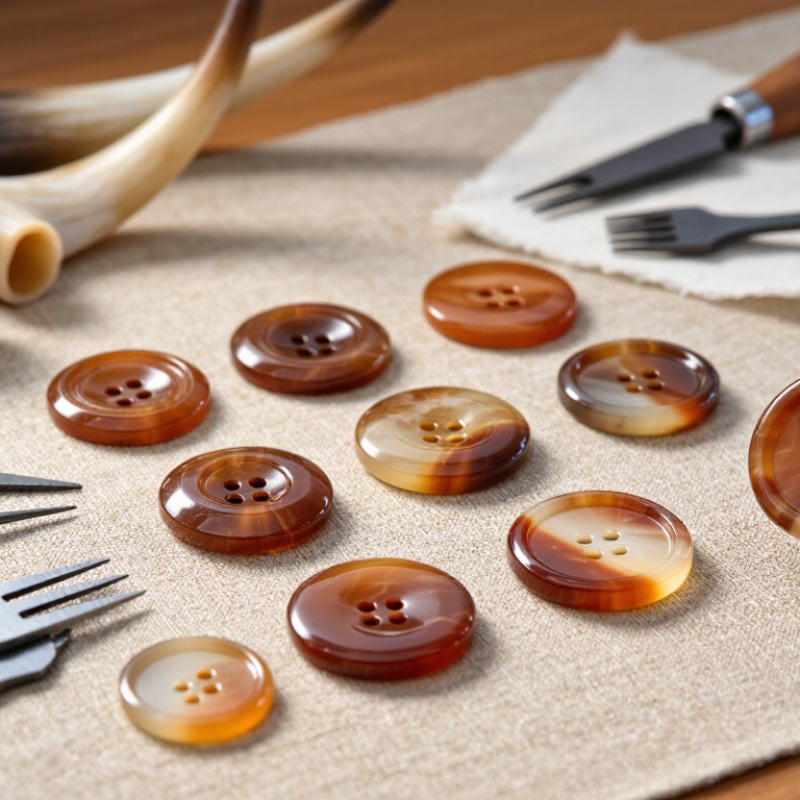
Coat horn buttons are made from the hard outer material of animal horns, most commonly cattle or water buffalo. This material is largely keratin, the same structural protein found in hair and nails. Manufacturers cut horn into blanks, then shape, heat, polish, and sometimes dye them. The result may show fine stripes, cloudy bands, or small color shifts. Those marks are natural, not necessarily flaws. FAOSTAT’s 2022 livestock data records roughly 1.57 billion cattle and 208 million buffalo worldwide. These figures indicate the scale of the animal populations, not how much horn becomes buttons.
Horn is not perfectly uniform. A button’s shade and grain can vary even within one batch, so matching replacements may take care. Some products sold as horn are made from plastic or other materials that imitate its appearance; checking the product description matters. Natural horn can feel warm and smooth, yet it may scratch or crack under rough handling or sudden temperature changes. It is not automatically the better choice for every coat. I would also avoid treating every visible streak as proof of authenticity. FAOSTAT livestock statistics provide useful context, but they do not verify the material in an individual button.
| Dimension | Details | What It Means for Coat Buttons |
|---|---|---|
| Main material | Natural animal horn, commonly from cattle or water buffalo | The button is cut and shaped from horn rather than molded from a uniform synthetic material. |
| Basic composition | Horn is made primarily of keratin, a tough structural protein also found in hair and nails. | Its natural protein structure gives the material a solid feel and a distinctive surface. |
| Color and pattern | Natural shades can include black, brown, cream, and mottled or streaked combinations. | Color and markings vary between buttons, so a set may not look perfectly uniform. |
| Manufacturing | Horn is selected, cut into blanks, shaped, drilled, and finished. | The finished button retains natural variations in tone and grain. |
| Natural variation | Horn is an organic material, so its color, pattern, and texture are not identical from piece to piece. | Small differences are characteristic of genuine horn and are not necessarily defects. |
| Care considerations | Avoid prolonged soaking, excessive heat, and harsh chemicals; wipe gently with a soft, damp cloth when needed. | Gentle care helps protect the button’s finish and natural material. |
| Imitation buttons | Some buttons are made from plastic or other molded materials designed to resemble horn. | A horn-like appearance alone does not confirm that a button is made from natural horn. |
They come from the hard outer material of animal horns, commonly cattle or water buffalo. It is largely keratin.
They may show fine stripes, cloudy bands, or small color shifts. Each one can look a little different.
No. Streaks can occur naturally, but appearance alone cannot confirm the material. Check the product description.
Makers inspect the horn, cut it into blanks, and turn each blank into a disc. They refine the rim and face, then drill holes.
Hidden splits can appear during shaping. Not every blank survives, which seems wasteful, but it helps avoid weak buttons.
They sand with increasingly fine abrasives and polish the horn. Too much heat or pressure can mark or distort it.
Not always. Shade and grain can vary within one batch, so finding a close match may take care.
Yes. Rough handling or sudden temperature changes may damage them. They can feel warm and smooth, but they are not indestructible.
No. Livestock statistics describe animal populations, not button production. They cannot verify an individual button’s material.
Coat Horn Buttons are made from natural animal horn, most commonly sourced from cattle, water buffalo, or similar livestock. The material is valued for its strength, durability, and distinctive appearance. To make buttons, horn is cleaned, cut into workable pieces, shaped into discs, drilled with holes, and polished. Skilled finishing helps create a smooth surface while preserving some of the material’s natural character.
Because horn develops naturally, each button can vary in color, pattern, and texture. Shades may range from pale cream to deep brown, with subtle streaks or mottling that make matching buttons less predictable than manufactured alternatives. Genuine horn often feels warm and slightly textured, though appearance alone may not confirm its material. To care for horn buttons, keep them away from prolonged heat, soaking, and harsh chemicals, and wipe them gently with a soft, damp cloth when needed.

 Fangyuan Metal Button