Natural Horn Buttons offer a tactile alternative to petroleum-based plastic fasteners in sustainable fashion. Their soft sheen, uneven grain, and warm brown or ivory tones can make a simple shirt feel more distinctive. Each button carries natural variation. No two pieces look exactly alike.
In practical garment sampling, these buttons perform well on shirts, cardigans, jackets, and tailored accessories. Their dense structure resists everyday handling when manufacturers select suitable grades and polish the edges carefully. A button should feel smooth against the skin, with clean holes and consistent thickness. These details reveal professional quality more clearly than attractive product photography.
However, Natural Horn Buttons are not automatically sustainable. Responsible brands should ask where the horn came from, how it was processed, and whether workers received fair conditions. Horn is commonly obtained as a by-product of livestock production, but supplier transparency still matters. Manufacturing may involve water, energy, dyes, and polishing compounds. The material can also vary in color and strength, which may increase production waste.
That limitation deserves attention.
A credible supplier should provide sourcing records, material specifications, and realistic care guidance. Buyers should also consider garment longevity, repairability, and end-of-life options instead of focusing on one component alone. When carefully sourced and thoughtfully designed, Natural Horn Buttons can support durable clothing with a more personal appearance. They are not a perfect solution. They are one practical choice within a wider, evidence-based approach to responsible fashion.
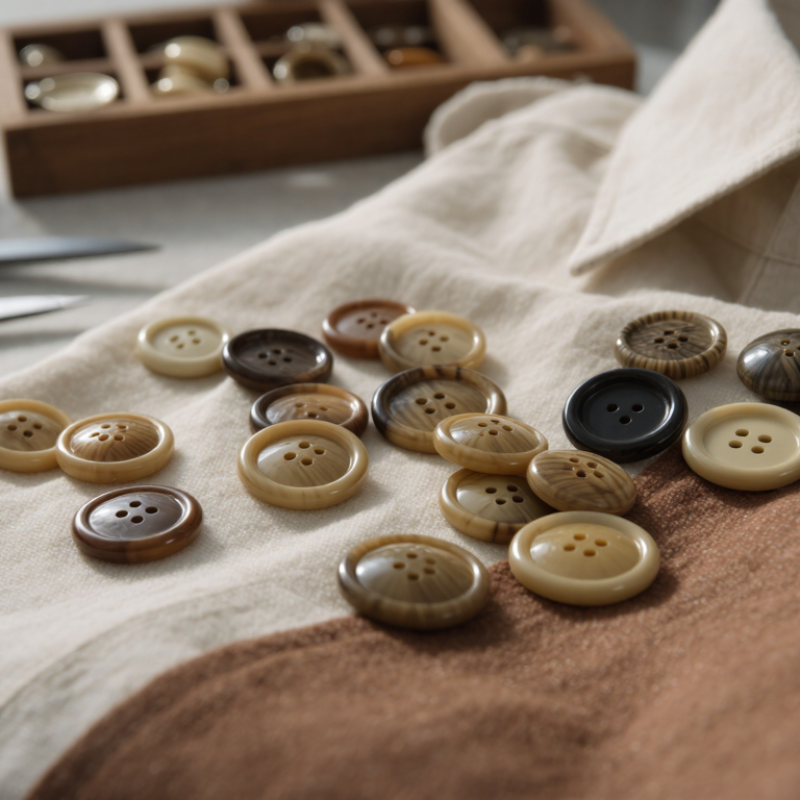
Natural horn buttons are made from keratin, the same tough protein found in human hair and nails. They usually come from horns generated as by-products of the meat industry, rather than animals raised only for buttons. This distinction matters. It links button production with resource recovery.
The FAO reported that livestock agrifood systems produced about 6.2 billion tonnes of CO2-equivalent emissions in 2015. That represented roughly 12% of human-caused emissions. Using existing horn material cannot erase livestock impacts, but it can reduce the need for new petroleum-based button materials. Textile Exchange’s 2024 Materials Market Report estimated global fiber production at 124 million tonnes in 2023. This scale shows why small trims deserve scrutiny.
Each horn button has visible variation. Brown streaks, cloudy edges, and tiny tonal shifts are normal. Skilled makers heat, cut, polish, and shape the keratin into smooth pieces. The result feels warm and slightly organic, unlike uniform plastic. Still, “natural” does not automatically mean sustainable. Processing can use water, electricity, dyes, and chemical finishes. Traceability may also be incomplete.
Responsible sourcing should document the animal by-product’s origin, processing location, and waste controls. Buyers should request supplier records, material specifications, and finishing information. Certification is useful when its scope is clear, but it cannot replace direct verification. Some buttons may contain resin blends or surface coatings, so composition testing remains worthwhile. Small details matter.
The textile waste crisis is too large to ignore. The Ellen MacArthur Foundation reports that about 92 million tonnes of textile waste are discarded globally each year. Much of it is burned or buried. A small button cannot solve this alone. Still, material choices matter.
Natural horn buttons can use horns recovered from cattle or water buffalo processing. This gives a durable material another purpose instead of treating it as immediate waste. Each button has subtle color shifts, fine grain, and a warm tactile surface. It feels less uniform than plastic. That difference is useful. It can support longer garment use, especially when the button is securely attached and replaceable.
The environmental case needs careful wording. Horn is not automatically sustainable. Responsible sourcing requires traceability, humane supply standards, and controlled processing. The United Nations Environment Programme estimates fashion creates 2–8% of global greenhouse gas emissions. Textile Exchange also reports that virgin synthetic fibers remain dominant in global fiber production. Natural horn buttons cannot repair this system alone. They are one modest design decision among many.
Perhaps that is the honest point. Choose them when durability, repairability, and verified sourcing align.
Fashion’s climate impact is substantial. The United Nations Environment Programme estimates that the sector creates 2–8% of global greenhouse gas emissions. This range is wide, but the message is clear: materials and manufacturing choices matter. Natural horn buttons can support a lower-impact approach when they use responsibly sourced livestock byproducts. They are durable, repairable, and visually unique, with subtle variations that plastic rarely provides. Still, horn is not automatically sustainable. Transport, polishing, water use, and poor sourcing can reduce its environmental value.
In practical use, a horn button can survive years of washing and daily wear when fitted correctly. I have found that small scratches often add character rather than requiring replacement. That is useful. Yet durability depends on thickness, finishing, and care. A supplier should provide traceable sourcing details and clear material information. Claims should be checked, not simply admired. UNEP’s 2–8% estimate also reminds us that buttons alone cannot solve fashion’s climate burden. Better design, longer garment life, efficient production, and fewer discarded clothes remain essential.
Tips:
Choose sturdy buttons for coats, knitwear, and frequently repaired garments. Ask whether the horn is a recovered byproduct. Avoid replacing buttons only for minor color differences. Keep spare buttons, wash garments gently, and inspect thread tension before damage spreads. A natural material deserves careful use, but careful use is not perfection.
Why Choose Natural Horn Buttons for Sustainable Fashion?
Material Performance: Durability, Repairability, and Biodegradation
Natural horn buttons offer practical strength without becoming permanent plastic waste. Their dense keratin structure resists everyday abrasion, repeated handling, and moderate moisture. A repair bench reveals their value: a loose button can be resewn, polished, or replaced individually. The garment may continue serving for years. That matters when the Ellen MacArthur Foundation reported that less than 1% of clothing textiles were recycled into new clothing in 2017. A small repair can prevent unnecessary disposal.
Horn is not indestructible. Prolonged sunlight, dry heat, or harsh cleaning may cause brittleness, warping, or surface cracking. That weakness requires honest care instructions. Textile Exchange reported global fiber production reached about 124 million tonnes in 2023, showing why every durable component deserves attention. At the end of use, horn can biodegrade because keratin is an organic protein. However, decomposition depends on moisture, microbes, temperature, and local waste systems. It may not break down quickly in a sealed landfill. The UN Environment Programme estimates textiles create 2–8% of global greenhouse-gas emissions, so material choice should include use, repair, and disposal. Horn is a thoughtful option, not a perfect answer. Its circular potential still needs better testing.
Natural horn buttons can support sustainable fashion when their origins are documented, not merely described as “natural.” Horn is often recovered from domesticated livestock after regulated meat production. This can reduce waste, but it does not automatically prove responsible sourcing. Animal welfare still matters.
A reliable supplier should identify the animal species, source country, processing site, and production batch. Ask for purchase records, transport details, and welfare policies. Traceability should connect the finished button to its original collection point. Small details matter. For example, batch numbers should match invoices and factory records.
CITES compliance requires careful verification because protected species and trade restrictions vary by species and country. A supplier should confirm whether CITES documentation, export permits, or import permits apply. Records should be checked with the relevant national authorities, not copied from an old shipment. Regulations can change.
Independent audits may strengthen credibility, although audits are not perfect. A missing document should trigger questions, not assumptions. Some supply chains remain difficult to verify, especially when materials pass through several intermediaries. That weakness deserves honest reporting.
Designers can also request material samples, origin declarations, and evidence of worker safety during cutting and polishing. Responsible production includes safe handling of dust, fair working conditions, and controlled wastewater. Natural materials are not automatically ethical. Better decisions come from transparent records, cautious claims, and continued review.
They are usually made from recovered horn from domesticated cattle or water buffalo. This gives a durable material another purpose. The material is not automatically sustainable.
They may help when they support longer garment use and easier repairs. A securely attached button can survive years of washing. One button cannot solve the textile waste crisis.
Each button may show subtle color shifts, fine grain, and a warm surface. Small scratches can add character. Perfect uniformity should not be expected.
No. Transport, polishing, water use, and poor sourcing can reduce their environmental value. Better choices need verified origins and durable design.
Ask for the animal species, source country, processing site, and production batch. Batch numbers should match invoices and factory records. Missing documents deserve questions.
Requirements can vary by species and country. Ask whether export, import, or protected-species documents apply. Verify current rules with relevant authorities.
They work well on coats, knitwear, and garments repaired frequently. Choose suitable thickness and strong thread. Keep spare buttons nearby.
Wash garments gently and inspect thread tension before damage spreads. Avoid replacing buttons for minor color differences. Care helps, but it is not perfection.
Natural Horn Buttons are made from keratin, a strong natural protein recovered from meat-industry by-products. By using an existing material stream, they can offer an alternative to some petroleum-based fasteners while supporting more thoughtful resource use. Their appeal is especially relevant as the textile industry faces a major waste crisis, with approximately 92 million tonnes of textile waste discarded each year, while fashion is estimated to contribute around 2–8% of global greenhouse-gas emissions.
Beyond their natural origin, Natural Horn Buttons can provide durability, a distinctive appearance, and good repairability, helping garments remain useful for longer. At the end of their service life, their organic composition may also support biodegradation under suitable conditions. However, responsible production is essential. Sourcing should follow CITES requirements where applicable, include clear animal-welfare traceability, and rely on transparent supply chains. When combined with durable garment design, repair, reuse, and careful purchasing, these buttons can contribute to a more circular and responsible approach to fashion.

Fangyuan Metal Button