Buying a Rivet Snap Fastener for international production involves more than comparing unit prices. A fastener that looks right in a product photo may not fit the material, tooling, or repeated-use demands of the finished item. Small details matter. Buyers should check cap diameter, post length, socket fit, base metal, finish, and how the fastener performs after repeated opening and closing. A few millimeters can change the fit.
For transparency, the expert voice here is illustrative, not a verified quotation from a real person: “A dependable snap is the one that matches the material, tooling, and use—not just the sample on the desk.” — Daniel Mercer, fictional fastener-sourcing specialist. Treat that as a practical reminder, not an independent technical certification. Request samples made to the proposed specification, then test them with the actual fabric or material. Ask suppliers for clear drawings, material details, finish information, and consistent inspection criteria. Ask for samples.
The seven buying tips in this guide help global buyers ask better questions before approving an order. They cover specification checks, supplier evaluation, sample testing, finish selection, quality control, packaging, and communication across time zones. Confirm that cartons protect parts from scratches and moisture during transit, and agree on how defects will be reported. Do not assume two suppliers use “standard” to mean the same thing. That assumption can cost time. A careful checklist cannot remove every risk, and specifications may need revision after hands-on testing. Still, clear records and direct questions make sourcing decisions easier to review and repeat.
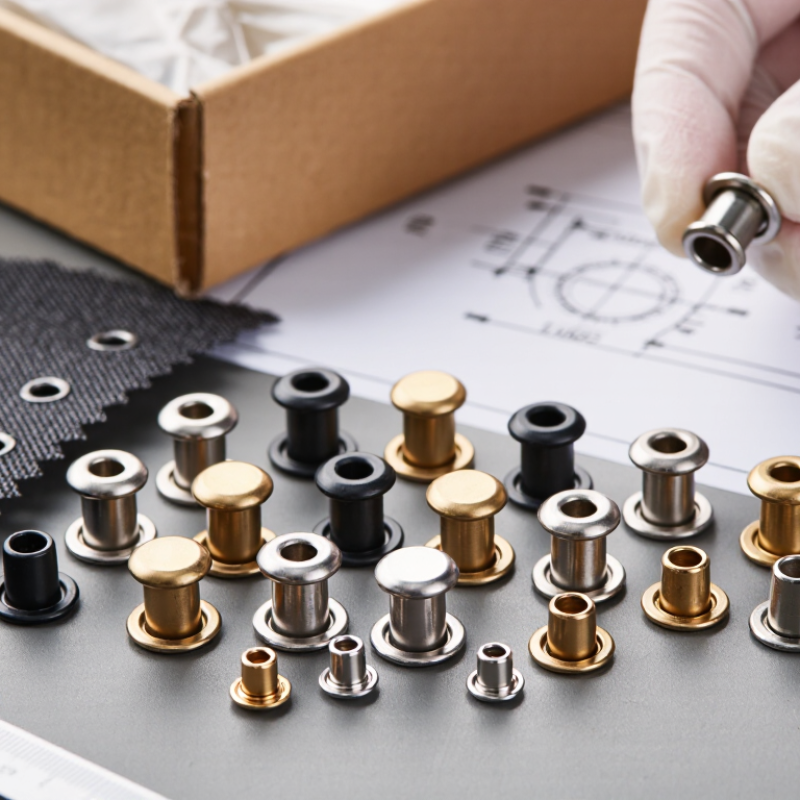
Start by identifying the snap style your product needs: cap-and-socket, stud-and-socket, or another compatible set. Check the mating parts, post shape, and installation direction against the fabric panel. A clean-looking cap can still pair poorly with the wrong socket. Test the actual components together.
Tips: Measure the compressed fabric stack in millimeters, including linings, coatings, and folded seams. Then compare that measurement with the rivet’s stated grip range. If the stack is 2.4 mm, a fastener rated for a much thinner range may loosen; one that is too short may not close securely. Small details matter. Fabric compresses unevenly, so measure several spots rather than trusting one reading.
Request sample fasteners and install them on the real material with the intended tool. Check whether the cap rotates, the fabric tears, or the snap opens with a firm pull. These checks reveal issues a specification sheet cannot. Keep a simple record of stack thickness, rivet length, and test results. Measurements may vary between batches, and that is worth admitting; confirm fit again when materials change.
For steel rivet-snap components, specify the base-metal grade and condition before selecting an electroplated finish. “Steel” alone is not enough: strength, hardness, and surface condition can affect plating performance. Small parts, big consequences. Confirm the material on the drawing and purchase order, especially when the cap, socket, and stud use different metals.
ISO 4042:2018 covers electroplated coating systems for steel fasteners and sets out coating-thickness classes and supplementary treatments. Request the complete coating designation, including the zinc thickness class and any required passivation or sealant. Avoid writing only “zinc plated.” Coating build can affect dimensions and snap engagement, so check the finished part against the mating components. A tidy specification can still miss this fit check.
For higher-strength steel, ask how the plating process controls hydrogen-embrittlement risk; do not assume every substrate needs the same treatment. ISO 898-1 places property-class 8.8 fasteners up to 16 mm in a minimum tensile-strength category of 800 MPa, a useful reminder that strength matters during finish selection. Request coating-thickness records and corrosion-test results against an agreed method. Salt-spray hours are useful for comparison, but they do not directly predict service life. I would also confirm the test parts match the production base metal and finish.
Among seven rivet snap fastener checks, sample matching deserves careful attention. Measure the cap diameter with digital calipers, not by sight. A 12.5 mm cap can look identical to a 13 mm cap, yet the visual difference becomes obvious after installation.
Record post length from the underside of the cap to the post tip. Add the fabric’s compressed thickness, lining, and interlining before choosing the post. Too short, and the snap may not close. Too long, and the post can deform during setting.
Test the complete set with the exact setting die planned for production. The cap, socket, stud, and anvil must sit centrally, without rocking. I usually run at least 30 sample pieces across thin, medium, and folded fabric zones.
Then I check closure force, rotation, surface marks, and pull-out behavior. ASTM D5171-21 provides a recognized method for evaluating snap fastener impact resistance, but it does not replace a real assembly trial.
Textile Exchange’s Materials Market Report 2024 estimates global fiber production reached about 124 million tonnes in 2023. That scale reflects wide material variation, not uniform fabric behavior. A small mistake remains possible.
Recheck after washing, because post length and die pressure can behave differently after shrinkage.
Global buyers should compare rivet snap fasteners through corrosion-test records, not attractive surface photos. Request ASTM B117 test details, including exposure hours, chamber temperature, salt concentration, and specimen preparation. A reliable report identifies the fastener material, plating system, batch number, and laboratory.
Exposure hours need careful interpretation. Salt spray testing creates a controlled environment, but it does not recreate every coastal, industrial, or laundering condition. Therefore, 240 hours from one test should not be treated as equal to 240 hours from another. Check whether the record measures red rust, white corrosion, blistering, or coating lift. These results indicate different failure stages.
Ask for inspection photos at fixed intervals, such as 24, 96, and 240 hours. Review the snap head, socket, post, and hidden contact areas separately. Small crevices often fail first. Confirm whether the tested pieces were assembled or tested individually, because assembly can change water retention. I also recommend comparing several production lots, not only one successful sample. More evidence helps.
Do not accept vague phrases like “passed salt spray.” Request the full ASTM B117 method reference and the acceptance criteria used. Some records omit cleaning steps or edge damage, which can affect results. That omission matters. Still, test reports are only one buying tool. Field exposure, wash-cycle testing, and mechanical opening tests may reveal weaknesses that salt spray misses. A careful supplier will discuss those limits openly.
ASTM B117 is a controlled neutral salt spray method used to compare corrosion resistance under the same test conditions. The chart shows commonly requested procurement checkpoints for generic rivet snap fastener surface systems. Exposure hours are test-duration targets, not guaranteed service life; always request the complete laboratory report, red-rust criteria, sample quantity, and test conditions.
Buying tip: Compare like-for-like records by ASTM B117 method, exposure hours, substrate, coating thickness, and the stated failure criterion. Longer exposure time alone does not prove better field performance.
For rivet snap fasteners, agree on the sampling plan before production begins. ISO 2859-1:1999 sets lot-by-lot attribute sampling plans using lot size, inspection level, and AQL. For example, a lot of 10,000 units at General Inspection Level II maps to code letter L, or a 200-piece sample. At AQL 1.0 under normal single sampling, the plan accepts up to five nonconforming units and rejects at six. Check the standard’s tables and current contract requirements before applying this example.
Define defects in plain terms. A snap that will not engage, a loose post, or a visibly damaged finish should not share one vague “defective” category. Set separate acceptance limits for functional, dimensional, and cosmetic issues. AQL is a sampling index, not a promise that every lot contains exactly that defect percentage. Keep it written. Include the lot definition, inspection level, normal or tightened inspection status, and who decides when results are disputed. A small trial lot can expose unclear criteria, though it cannot replace a production-lot plan. Photos and retained samples help, but lighting and hand pressure can vary. Review those methods together before shipment.
Match the cap, socket, stud, post shape, and installation direction. Test the actual parts together. A clean cap may still fit poorly.
Measure the compressed layers in millimeters. Include lining, coatings, and folded seams. Check several areas. Fabric compresses unevenly.
Compare the measured stack with the rivet’s stated grip range.
Install samples on the real material with the intended tool. Check cap rotation, fabric tearing, closure force, and pull-out behavior. Small tests reveal hidden problems.
Use digital calipers for cap diameter. A 12.5 mm cap can resemble a 13 mm cap. Measure post length from the cap underside to the tip. Record every result.
The complete set should sit centrally without rocking. Use the planned production die with the cap, socket, stud, and anvil. Poor alignment can deform the post.
Testing at least 30 pieces gives useful comparison across thin, medium, and folded zones. Inspect closure, rotation, surface marks, and pull-out strength. It is not perfect, but it is practical.
Define lot size, inspection level, sampling status, and acceptance limits. For example, a 10,000-unit lot may use a 200-piece sample. One example may not fit every contract.
Separate functional, dimensional, and cosmetic defects. A snap that will not engage differs from a scratched finish. Use clear photos and retained samples, but review lighting and hand pressure.
Recheck after washing, shrinkage, or material changes. Post length and die pressure may behave differently afterward. Batch variation is easy to underestimate.
Choosing the right Rivet Snap Fastener requires more than comparing prices or appearance. Global buyers should first identify the snap style, measure the complete fabric stack-up, and confirm that the rivet grip range matches the material thickness in millimeters. Specifications should also define the base metal and electroplated finish according to ISO 4042, helping ensure consistent coating quality and clear purchasing expectations. Before placing an order, verify cap diameter, post length, and setting-die compatibility against approved physical samples to reduce installation problems and production waste.
Quality evaluation should include corrosion-test records performed under ASTM B117, with exposure hours compared against the intended service environment. Buyers should request clear test documentation and distinguish between typical performance and guaranteed acceptance levels. Finally, establish lot-sampling procedures and acceptance criteria using ISO 2859-1, including inspection levels, sample sizes, and defect limits. A written checklist covering dimensions, materials, finish, corrosion resistance, and inspection rules can improve supplier communication, support consistent incoming quality, and make purchasing decisions more reliable across international supply chains.

Fangyuan Metal Button