Fashion Horn Buttons bring natural color, subtle grain, and a warm finish to tailored coats, shirts, and accessories. Unlike uniform plastic trims, horn buttons can vary from piece to piece. That variation is part of their appeal. It can also complicate matching. A sample may look beautifully mottled, while the production batch appears darker or more regular. Small details matter.
In 2026, sourcing well means looking beyond a supplier’s product photos. This guide considers material descriptions, documented origin, sample quality, production capacity, and communication about lead times. Ask for close-up images and physical samples under natural light. Check hole placement, edge polish, thickness, and how the buttons feel against the intended fabric. Request clear information about lawful sourcing and applicable import requirements for your market. When a supplier cannot explain the material or its origin, pause and verify before ordering.
Then compare quotations carefully. A low unit price may exclude finishing, shipping, or acceptable quality controls. Confirm minimum order quantities, color tolerances, packaging, and what happens if a batch differs from the approved sample. Keep written specifications. They help when details are remembered differently later. There is no perfect checklist, and natural variation cannot be removed without changing the material’s character. The aim is a reliable, transparent supply choice that suits the garment, the budget, and the buyer’s standards.
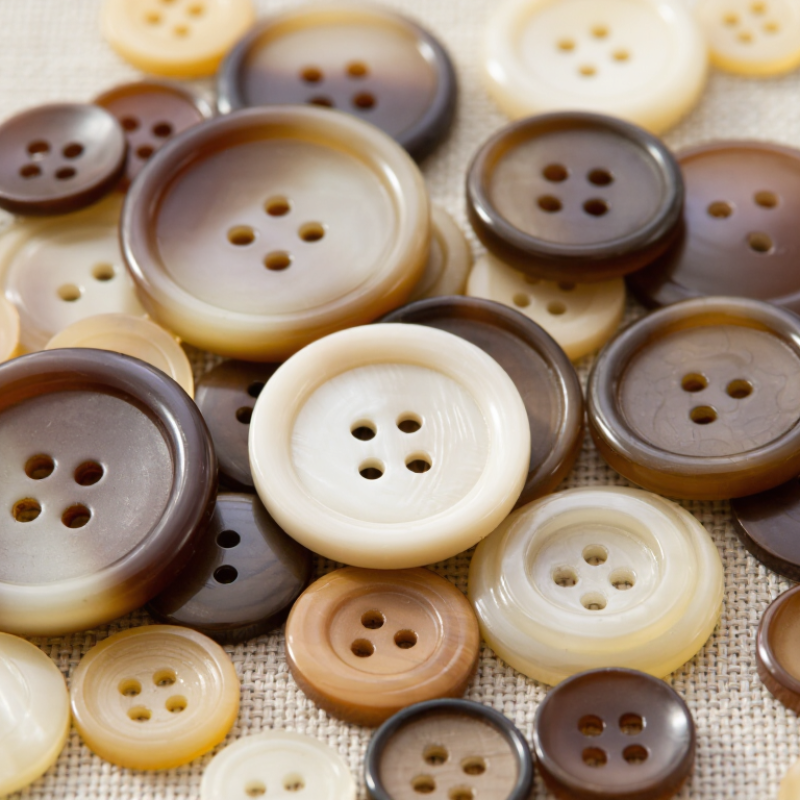
Fashion horn buttons are small fasteners made from animal horn, often shaped, polished, and drilled for sewing. Their appeal is tactile: a brown button may show cloudy streaks, fine bands, or subtle color shifts. No two look exactly alike. They are commonly used on tailored coats, blazers, cardigans, and heavier shirts, where a natural finish complements wool, cotton, or linen. Some products described as “horn-look” are made from other materials, so confirm composition rather than relying on appearance alone.
Textile Exchange’s Materials Market Report 2024 estimates that global fiber production reached 124 million tonnes in 2023 and may reach 160 million tonnes by 2030. This is not a button-demand forecast, but it highlights the scale of material choices across fashion supply chains. For sourcing, request the material description, origin information, size tolerances, and finish samples. Check buttons under daylight; color and surface can vary between batches. That sounds simple. It isn’t. A sample may look consistent while bulk production does not, so agree on acceptable variation before ordering.
Tips: Ask whether the buttons are genuine horn or imitation, and request written specifications. Test a few sewn buttons on the actual garment fabric; thick coats may need wider shanks or stronger stitching. Keep a signed sample for comparison. Natural variation is part of the appeal, but it can also complicate matching replacement buttons later.
Set a written trim specification before requesting samples. “Natural” is not a material grade. Identify the horn species and source, then request origin and traceability records. Confirm whether the button is genuine horn or a horn-effect substitute. Textile Exchange’s Materials Market Report 2024 estimates global fiber production reached 124 million tonnes in 2023. That scale makes documented material choices important throughout apparel supply chains. Keep records with the purchase order.
Specify diameter in millimetres, thickness, hole count, and sewing method. A 20 mm button can still vary in thickness and weight. Ask for a tolerance range, not just a sample. For finish, define gloss, color variation, edge polish, and acceptable natural markings under consistent light. Check a production sample against the approved reference. Small differences matter.
Compliance needs a destination-specific review. Request composition details, chemical test reports, and documentation confirming the material’s origin; requirements can vary by market. Fashion Revolution’s 2023 Fashion Transparency Index reported an average disclosure score of 26% across 250 major brands. That measures public disclosure, not product safety, but it underlines a real sourcing gap. Horn is not automatically the better choice. If a supplier cannot explain its source clearly, pause and reassess.
Finding reliable horn button manufacturers and suppliers takes more than comparing catalog photos. Ask each supplier for material details, available sizes, minimum order quantities, sample fees, and current production lead times. Horn has natural variation, so request several samples to inspect color, grain, edge smoothness, and hole placement. Confirm whether the buttons are genuine horn or a horn-look alternative, and request written material information for your records.
Compare samples under daylight and warm indoor light. Check that button thickness feels consistent and that the holes suit your garment’s thread and sewing equipment. Ask how the supplier checks defects, handles replacement requests, and protects buttons during shipping. Compare total delivered costs, not just the unit price. A neat spreadsheet helps, but it cannot show how a surface feels or how shades vary across a batch. I may be overcautious here; one sample still cannot represent every production run.
For 2026 collections, assess horn button samples under the same conditions as the finished garment. Check diameter, thickness, hole placement, edge smoothness, and color consistency. Natural material varies, so request several pieces rather than one polished showroom sample. Small flaws matter. Ask for documented material origin and clear care guidance, then test buttons using the garment’s planned washing or cleaning method. A button that looks excellent on a desk may crack or change tone after handling.
Compare quotes by specification, not unit price alone. Ask whether sorting, drilling, finishing, packaging, and rejected pieces are included. Request a sample approval record and a written tolerance for size and color variation. Pricing should explain any tooling charge, minimum order quantity, and cost changes between small and larger runs. A very low quote can hide uneven grading or extra inspection costs. I would not assume the cheapest option is the best value.
Production capacity needs evidence. Ask for monthly output, current lead times, and the supplier’s process for keeping batches consistent. Confirm how they handle shortages and whether they can repeat an approved finish later in the season. Request a small pilot lot before placing a full order. It may add time, but it reveals problems early. Capacity figures can sound precise; verify them against recent production records and sample delivery dates.
Suggested evaluation weights for comparing suppliers. These are planning weights, not market statistics; adjust them to your product and verify with sample tests, written quotations, and a production-capacity review.
How to use it: Score each supplier against the same criteria. Inspect samples for color consistency, finish, dimensions, and defects; compare like-for-like prices; and confirm available capacity, lead times, and repeat-order consistency before placing a production order.
For fashion horn buttons, a reliable order starts with a contract that describes the material, finish, dimensions, and acceptable variation. Attach an approved sample and specify color under consistent lighting. Define inspection points, defect limits, replacement terms, and who pays for rework. Keep a signed record. Small omissions matter.
Shipping needs the same precision. UNCTAD’s Review of Maritime Transport 2024 notes that maritime transport carries over 80% of world trade by volume, so port delays can affect even a small button order. Put the Incoterms rule, named delivery place, carton count, and latest dispatch date in writing. Ask for packing photos and shipment documents before goods leave. A tracking number alone is not proof that quantities match the order.
Quality controls should happen before dispatch, not only after cartons arrive. Check samples from multiple production batches for hole spacing, thickness, surface cracks, and color consistency. For natural horn, variation is expected; agree on a practical tolerance rather than promising identical pieces. Record inspection results with dated photos and batch labels. It is easy to overfocus on appearance, while drill alignment may cause sewing problems later. A pre-shipment check can catch that.
They are fasteners made from animal horn, shaped, polished, and drilled for sewing. Each may show cloudy streaks or fine bands. No two look exactly alike.
They suit tailored coats, blazers, cardigans, and heavier shirts. Their natural finish pairs well with wool, cotton, and linen.
Appearance alone is not reliable. Ask for written material details and confirm the button’s composition before ordering.
Ask about material, origin, sizes, tolerances, finish, minimum order quantity, sample fees, and production lead time. Keep the details in writing.
Natural color and grain can vary. Check multiple samples for shade, smooth edges, thickness, and hole placement. One sample may not represent a full batch.
Look at the samples in daylight and warm indoor light. Note their color and surface differences. Simple, but easy to overlook.
Sew a few onto the actual fabric. Thick coats may need wider shanks or stronger stitching. Check that the holes suit your thread and equipment.
Compare total delivered costs, not just unit prices. Ask how defects, replacements, and shipping protection are handled. A spreadsheet helps, but it cannot show how a button feels.
Keep a signed, approved sample. Record its dimensions, finish, and color notes, then request a small production batch when available. Matching replacements later can be difficult.
Sourcing Fashion Horn Buttons in 2026 starts with understanding where they will be used, such as on coats, jackets, shirts, or accessories. Buyers should define their needs before contacting suppliers, including the button’s material, dimensions, color, surface finish, durability, and any applicable product or market requirements. Clear specifications make it easier to compare options and reduce misunderstandings during production.
Next, assess potential manufacturers and suppliers by reviewing their experience, communication, sample quality, pricing, lead times, and production capacity. Test samples against your intended design and quality standards, and confirm that quoted costs and timelines suit your order. Before placing an order, document specifications, quantities, payment terms, shipping arrangements, inspection steps, and procedures for addressing quality issues. Careful planning and written quality controls help ensure the finished buttons meet expectations and arrive on schedule.

Fangyuan Metal Button